Introduction
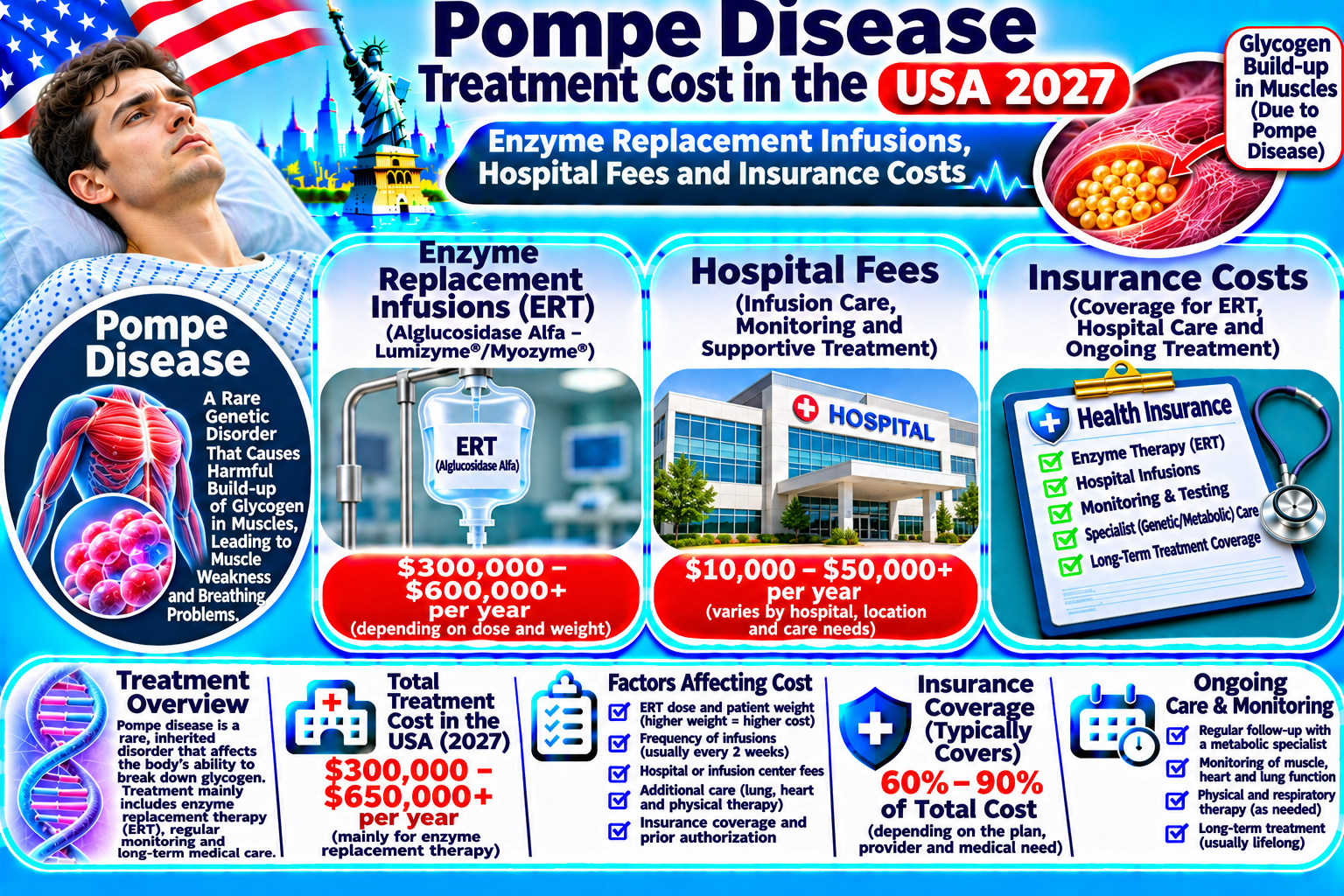
Pompe disease is a rare inherited metabolic disorder that affects the body’s ability to break down glycogen, a stored form of sugar. Glycogen accumulates inside cells, particularly muscle cells, causing progressive muscle weakness and potentially serious breathing or heart complications. Treatment often requires specialized enzyme replacement therapy, regular hospital infusions, rehabilitation, respiratory support, and lifelong monitoring.

Understanding Pompe disease treatment costs in the USA in 2027 is important for patients and families comparing enzyme replacement infusion prices, hospital fees, diagnostic testing, specialist consultations, and health insurance coverage.
Pompe disease can create substantial medical expenses because disease-specific medications are complex biological therapies. Many patients require repeated intravenous infusions over many years. Costs also vary according to patient weight, disease severity, prescribed medication, infusion location, and insurance benefits.
This comprehensive guide explains estimated American Pompe disease treatment expenses for 2027, including enzyme replacement therapy, genetic testing, respiratory care, hospitalization, rehabilitation, and financial assistance.
What Is Pompe Disease?
Pompe disease, also called glycogen storage disease type II, is caused by disease-associated variants in the GAA gene.
These genetic changes reduce the activity of acid alpha-glucosidase, an enzyme responsible for breaking down glycogen inside lysosomes.
When glycogen accumulates, it damages muscle cells and interferes with normal muscle function.
Pompe disease is inherited in an autosomal recessive pattern. An affected individual typically inherits a disease-causing GAA variant from each biological parent.
Symptoms and disease progression vary significantly between patients.
Types of Pompe Disease
Infantile-Onset Pompe Disease
Classic infantile-onset Pompe disease usually becomes apparent during the first months of life. It can cause severe muscle weakness, feeding difficulties, breathing problems, and enlargement of the heart.
Early treatment is particularly important because untreated classic infantile-onset disease can progress rapidly and become life-threatening.
Late-Onset Pompe Disease
Late-onset Pompe disease can develop during childhood, adolescence, or adulthood.
It commonly causes progressive weakness in muscles near the hips and shoulders, along with respiratory muscle involvement.
Unlike classic infantile-onset disease, significant heart enlargement is less typical in late-onset Pompe disease.
Common Symptoms of Pompe Disease
- Progressive muscle weakness.
- Difficulty walking or climbing stairs.
- Frequent falls or reduced endurance.
- Breathing difficulties, particularly during sleep.
- Weak cough and respiratory infections.
- Feeding difficulties in affected infants.
- Delayed motor development.
- Enlarged heart in classic infantile-onset disease.
- Fatigue and reduced physical activity.
Symptoms should be assessed by qualified medical professionals because similar findings can occur in other neuromuscular conditions.
How Is Pompe Disease Diagnosed?
GAA Enzyme Activity Testing
Measurement of acid alpha-glucosidase enzyme activity is an important diagnostic test. Reduced activity supports a diagnosis of Pompe disease.
GAA Genetic Testing
Genetic analysis identifies disease-associated variants and helps confirm the diagnosis.
Genetic counseling may be recommended to explain inheritance patterns and family screening options.
Creatine Kinase Blood Testing
Creatine kinase levels may be elevated because of muscle damage, although the test is not specific to Pompe disease.
Respiratory Function Testing
Pulmonary function tests evaluate respiratory muscle strength and help identify breathing problems.
Cardiac Evaluation
Electrocardiograms and echocardiograms are especially important in infantile-onset disease because of the risk of heart involvement.
Newborn Screening
Pompe disease is included in newborn screening programs in many American states. Screening results require appropriate confirmatory evaluation.
Pompe Disease Treatment Options
Enzyme Replacement Therapy
Enzyme replacement therapy, or ERT, supplies a functional form of acid alpha-glucosidase to help reduce glycogen accumulation.
ERT is a major disease-specific treatment and can improve important clinical outcomes, although it does not completely reverse existing muscle damage.
Alglucosidase Alfa
Alglucosidase alfa, marketed as Lumizyme in the United States, is an intravenous enzyme replacement treatment for Pompe disease.
It is generally administered every two weeks according to prescribing instructions.
Avalglucosidase Alfa
Avalglucosidase alfa-ngpt, marketed as Nexviazyme, is another intravenous enzyme replacement therapy for eligible patients.
It is administered according to age, weight, and prescribing requirements.
Cipaglucosidase Alfa With Miglustat
Cipaglucosidase alfa-atga, marketed as Pombiliti, is used with miglustat, marketed as Opfolda, for certain eligible adults with late-onset Pompe disease.
Miglustat serves as an enzyme stabilizer in this treatment combination. Eligibility and administration requirements must be assessed by a specialist.
Respiratory Support
Some patients require noninvasive ventilation, respiratory therapy, or additional breathing support as the disease progresses.
Physical Rehabilitation
Physical and occupational therapy can help maintain mobility, reduce complications, and support daily functioning.
Nutritional and Supportive Care
Patients with swallowing difficulties, reduced endurance, or feeding problems may benefit from nutritional evaluation and other supportive services.
Pompe Disease Treatment Cost in the USA in 2027
Pompe disease treatment costs in the United States depend heavily on enzyme replacement medication, patient weight, infusion frequency, hospital services, respiratory support, and insurance arrangements.
ERT is often the largest recurring expense. Drug costs can reach hundreds of thousands of dollars annually and may be considerably higher for some patients.
The following figures are illustrative 2027 budgeting estimates rather than verified national averages, guaranteed hospital quotations, or actual patient out-of-pocket expenses.
Estimated USA Cost Breakdown
| Treatment or Service | Estimated Cost (USD) |
|---|---|
| Neuromuscular Specialist Consultation | $200–$900+ |
| GAA Enzyme Activity Testing | $150–$800+ |
| GAA Genetic Testing | $500–$3,000+ |
| Genetic Counseling | $150–$500+ |
| Pulmonary Function Testing | $200–$1,200+ |
| Echocardiogram | $500–$2,500+ |
| ERT Medication and Infusion Episode | $8,000–$35,000+ |
| Annual ERT Treatment | $200,000–$900,000+ |
| Infusion Administration Only | $300–$2,000+ per session |
| Physical Therapy Session | $100–$350+ |
| Respiratory Equipment and Support | $1,000–$15,000+ annually |
| Hospitalization for Complications | $15,000–$80,000+ |
| ICU Hospitalization | $40,000–$200,000+ |
Important: These are broad hypothetical budgeting ranges. Annual ERT estimates and per-infusion prices represent overlapping expenses and should not be added together. Hospital charges may already include medication, monitoring, and professional services.
USA Pompe Disease Cost Comparison
Because this article focuses on the United States, the following table compares American treatment scenarios rather than international countries.
| USA Treatment Scenario | Illustrative Annual Budget |
|---|---|
| Diagnostic Evaluation and Monitoring | $2,000–$12,000+ |
| ERT With Routine Specialist Monitoring | $200,000–$900,000+ |
| ERT With Respiratory and Rehabilitation Support | $230,000–$950,000+ |
| Severe Disease With Hospitalization | $300,000–$1,100,000+ |
These scenarios are illustrative rather than standardized treatment packages. Actual expenses depend on disease severity, prescribed medication, body weight, hospital resources, and insurance coverage.
Enzyme Replacement Therapy Costs for Pompe Disease
Enzyme replacement therapy is the main disease-specific treatment for many patients with Pompe disease. It delivers a manufactured version of the missing enzyme through intravenous infusion, helping the body process accumulated glycogen.
Most approved regimens involve infusions approximately every two weeks, although the exact dose and schedule depend on the prescribed product, body weight, and clinical circumstances.
A patient receiving treatment every two weeks may attend approximately 26 infusion appointments annually. This creates recurring expenses for medication, infusion equipment, nursing services, and monitoring.
ERT can improve outcomes, but it does not eliminate the underlying genetic condition. Many patients therefore require long-term therapy.
Lumizyme Treatment Expenses
Lumizyme contains alglucosidase alfa and is an established treatment for Pompe disease.
The recommended labeled dosage is generally 20 milligrams per kilogram of body weight every two weeks.
Because dosing depends on weight, the amount of medication required for an adult may be considerably greater than for an infant.
The total treatment cost includes medication acquisition, infusion administration, clinical observation, and management of possible reactions.
Some patients develop antibodies against the infused enzyme. In particular, infants may require specialized immune assessments and additional treatment planning.
Nexviazyme Treatment Costs
Nexviazyme contains avalglucosidase alfa-ngpt and is approved in the United States for eligible patients aged one year and older with late-onset Pompe disease.
It is administered intravenously every two weeks, with dosing determined by patient weight.
Medication requirements, pharmacy contracts, and infusion arrangements influence the overall price.
Patients should discuss expected benefits, adverse reactions, and treatment suitability with an experienced neuromuscular specialist.
Pombiliti and Opfolda Combination Therapy
Pombiliti and Opfolda are used together for adults with late-onset Pompe disease who weigh at least 40 kilograms and are not improving on their current enzyme replacement therapy.
Pombiliti supplies the enzyme, while oral Opfolda helps stabilize it during treatment.
The combination requires coordinated administration according to prescribing instructions.
Its total cost may include both medications, intravenous infusion services, laboratory monitoring, and specialist appointments.
Because the combination has specific eligibility requirements, it is not automatically appropriate for every patient with Pompe disease.
Hospital Infusion Fees
Infusion administration can create substantial additional expenses beyond the medication itself.
Hospital outpatient departments may charge for facility use, nursing services, infusion supplies, monitoring, and professional care.
Some patients may qualify for treatment at an independent infusion center or through a supervised home infusion program.
However, home infusion is not appropriate for everyone, especially patients with significant infusion reactions or unstable medical conditions.
When comparing prices, patients should request a complete estimate covering both the medication and its administration.
Infusion Reactions and Additional Medical Expenses
Enzyme replacement therapy can cause infusion-associated reactions, including rash, fever, breathing symptoms, or changes in blood pressure.
Severe allergic reactions, including anaphylaxis, can occur and require immediate treatment.
Patients with serious heart or respiratory involvement may need additional precautions during infusions.
Managing reactions can involve medications, prolonged observation, emergency services, or changes in infusion procedures.
These complications may increase treatment expenses and influence the safest location for future infusions.
Infantile-Onset Pompe Disease Treatment Costs
Classic infantile-onset Pompe disease often requires intensive multidisciplinary care because of the risk of serious heart and respiratory complications.
Early enzyme replacement therapy is important, and infants may need frequent cardiac examinations, respiratory monitoring, nutritional support, and developmental assessments.
Some infants require immune tolerance induction to reduce the risk of harmful antibody responses to enzyme replacement therapy.
These additional services can significantly increase medical expenses during the first years of life.
Respiratory Support and Ventilation Costs
Respiratory muscle weakness is an important complication of Pompe disease, particularly in late-onset cases.
Patients may require sleep studies, pulmonary function testing, airway clearance equipment, or noninvasive ventilation.
Advanced respiratory weakness may require more extensive breathing support.
Costs depend on equipment type, supplies, respiratory therapy, insurance benefits, and the need for hospital care.
Regular respiratory monitoring helps identify complications and guide appropriate treatment.
Physical Therapy and Rehabilitation Expenses
Physical therapy and occupational therapy are important components of Pompe disease management.
Rehabilitation may help patients preserve mobility, improve endurance, maintain flexibility, and adapt everyday activities.
Some individuals require walking aids, wheelchairs, braces, or home modifications.
Therapy frequency depends on muscle weakness, fatigue, respiratory status, and personal treatment goals.
Rehabilitation programs should be individualized because excessive physical exertion may not be appropriate for every patient.
Hospitalization and ICU Costs
Patients with severe Pompe disease may require hospitalization for respiratory infections, heart complications, swallowing problems, or other medical emergencies.
Hospital expenses may include:
- Emergency department evaluation.
- Neurology and cardiology consultations.
- Respiratory monitoring and therapy.
- Blood tests and diagnostic imaging.
- Intravenous medications.
- Mechanical ventilation when necessary.
- Intensive care nursing.
- Nutritional and rehabilitation support.
Prolonged intensive care can create substantial hospital bills, particularly when respiratory failure requires mechanical ventilation.
Pompe Disease Treatment With Health Insurance
Many comprehensive American health insurance plans cover medically necessary Pompe disease treatment, including eligible enzyme replacement medications, diagnostic testing, specialist consultations, and hospital services.
However, coverage depends on the patient’s policy, prescribed product, medical necessity documentation, and provider network.
Important insurance considerations include:
- Annual deductible and out-of-pocket maximum.
- Prior authorization for enzyme replacement therapy.
- Coverage for Lumizyme or Nexviazyme.
- Coverage for Pombiliti and Opfolda when appropriate.
- Infusion center and hospital network requirements.
- Home infusion eligibility.
- Respiratory equipment benefits.
- Rehabilitation coverage and visit limits.
Patients should confirm whether the medication and infusion administration are billed under medical benefits, pharmacy benefits, or a combination of both.
Medicare Coverage for Pompe Disease
Medicare may cover medically necessary Pompe disease treatment for eligible beneficiaries when applicable requirements are satisfied.
Medicare Part B may cover qualifying physician-administered infusion medications and outpatient services.
Medicare Part D may cover eligible outpatient prescription medications, depending on the product and coverage rules.
Patients should verify prior authorization requirements, participating infusion providers, and expected cost-sharing.
Medicaid and Financial Assistance
Medicaid may provide coverage for eligible individuals with Pompe disease, subject to state-specific benefits and medical necessity requirements.
Some manufacturers offer patient support services, reimbursement assistance, or financial assistance programs for qualifying patients.
Rare disease organizations and hospital financial counselors may also help families identify available resources.
Eligibility requirements vary, and certain assistance programs are unavailable to patients using federal healthcare coverage.
Pompe Disease Treatment Without Insurance
Uninsured patients may face extremely high expenses for enzyme replacement therapy, infusion administration, diagnostic testing, and hospitalization.
Families should contact specialty treatment centers and hospital financial counselors before scheduled treatment whenever possible.
Written estimates should identify medication charges, facility fees, physician services, laboratory testing, and other expenses separately.
Patients should not interrupt prescribed enzyme replacement therapy without discussing the medical risks and available options with their specialist.
Factors Influencing Pompe Disease Treatment Prices
1. Patient Weight
Many enzyme replacement medications are dosed according to body weight, making medication requirements different between patients.
2. Disease Severity
Patients with severe muscle weakness, respiratory failure, or cardiac involvement may require additional medical services.
3. Medication Selection
Lumizyme, Nexviazyme, and Pombiliti with Opfolda have different treatment requirements and pricing arrangements.
4. Infusion Location
Hospital outpatient departments, independent infusion centers, and supervised home infusion services may charge different amounts.
5. Insurance Coverage
Deductibles, negotiated reimbursement rates, provider networks, and authorization requirements affect patient financial responsibility.
6. Treatment Complications
Infusion reactions, respiratory infections, hospitalization, and intensive care can increase total expenses.
7. Geographic Location
Healthcare prices vary across American states and cities because of regional provider charges and insurance arrangements.
Long-Term Pompe Disease Management
Pompe disease generally requires ongoing medical management, even when enzyme replacement therapy provides meaningful benefits.
Long-term care may include:
- Regular neuromuscular specialist consultations.
- Scheduled enzyme replacement infusions.
- Respiratory function monitoring.
- Cardiac evaluations when indicated.
- Physical and occupational therapy.
- Nutritional assessments.
- Mobility equipment and assistive devices.
- Monitoring for infusion-related complications.
Patients and families should also consider transportation expenses, time away from work, caregiver responsibilities, and insurance changes.
How to Reduce Pompe Disease Treatment Costs
- Verify insurance benefits before beginning treatment.
- Request complete written infusion estimates.
- Confirm that infusion providers are in-network.
- Review specialty medication authorization requirements.
- Ask about manufacturer assistance programs.
- Explore medically appropriate infusion settings.
- Review Medicare and Medicaid eligibility.
- Consult a rare disease financial counselor.
Patients should never reduce medication doses, delay infusions, or discontinue treatment solely because of cost without consulting their healthcare team.
Frequently Asked Questions
How much does Pompe disease treatment cost in the USA in 2027?
Illustrative annual treatment expenses may reach hundreds of thousands of dollars for patients receiving enzyme replacement therapy. Costs can be higher when hospitalization and advanced supportive care are necessary.
How much does enzyme replacement therapy cost?
ERT can involve substantial recurring medication expenses, potentially exceeding $400,000 annually for some patients before insurance adjustments.
Does insurance cover Pompe disease treatment?
Many comprehensive health insurance plans cover medically necessary treatment, although prior authorization, specialty medication rules, and patient cost-sharing may apply.
How often are Pompe disease infusions given?
Many approved enzyme replacement regimens involve intravenous infusions every two weeks. Exact schedules depend on the prescribed treatment.
Is Pompe disease curable?
There is currently no established cure. Available therapies aim to improve outcomes, manage symptoms, and slow disease-related complications.
Can Pompe disease cause respiratory failure?
Yes. Progressive respiratory muscle weakness can lead to serious breathing problems, particularly in advanced disease.
Is genetic testing important?
Yes. GAA genetic testing helps confirm diagnosis, explain inheritance, and support appropriate family counseling.
Conclusion
Pompe disease treatment costs in the USA in 2027 depend on enzyme replacement infusions, hospital fees, genetic testing, respiratory support, rehabilitation, and insurance coverage.
Patients should compare complete treatment estimates, verify specialty medication benefits, and consult experienced neuromuscular specialists before making medical decisions.
Early diagnosis, appropriate enzyme replacement therapy, regular monitoring, and careful financial planning can help families manage the long-term expenses associated with Pompe disease.
Medical Disclaimer: This article provides general educational and financial planning information only. It does not replace professional medical advice, diagnosis, or treatment. All 2027 cost ranges are illustrative estimates and should be verified directly with hospitals, specialists, pharmacies, infusion providers, and insurance companies.
