Introduction
Hereditary angioedema, commonly known as HAE, is a rare genetic disorder that causes recurring episodes of swelling in different parts of the body. Attacks may affect the hands, feet, face, abdomen, or throat. Swelling involving the upper airway can become life-threatening and requires immediate medical attention.

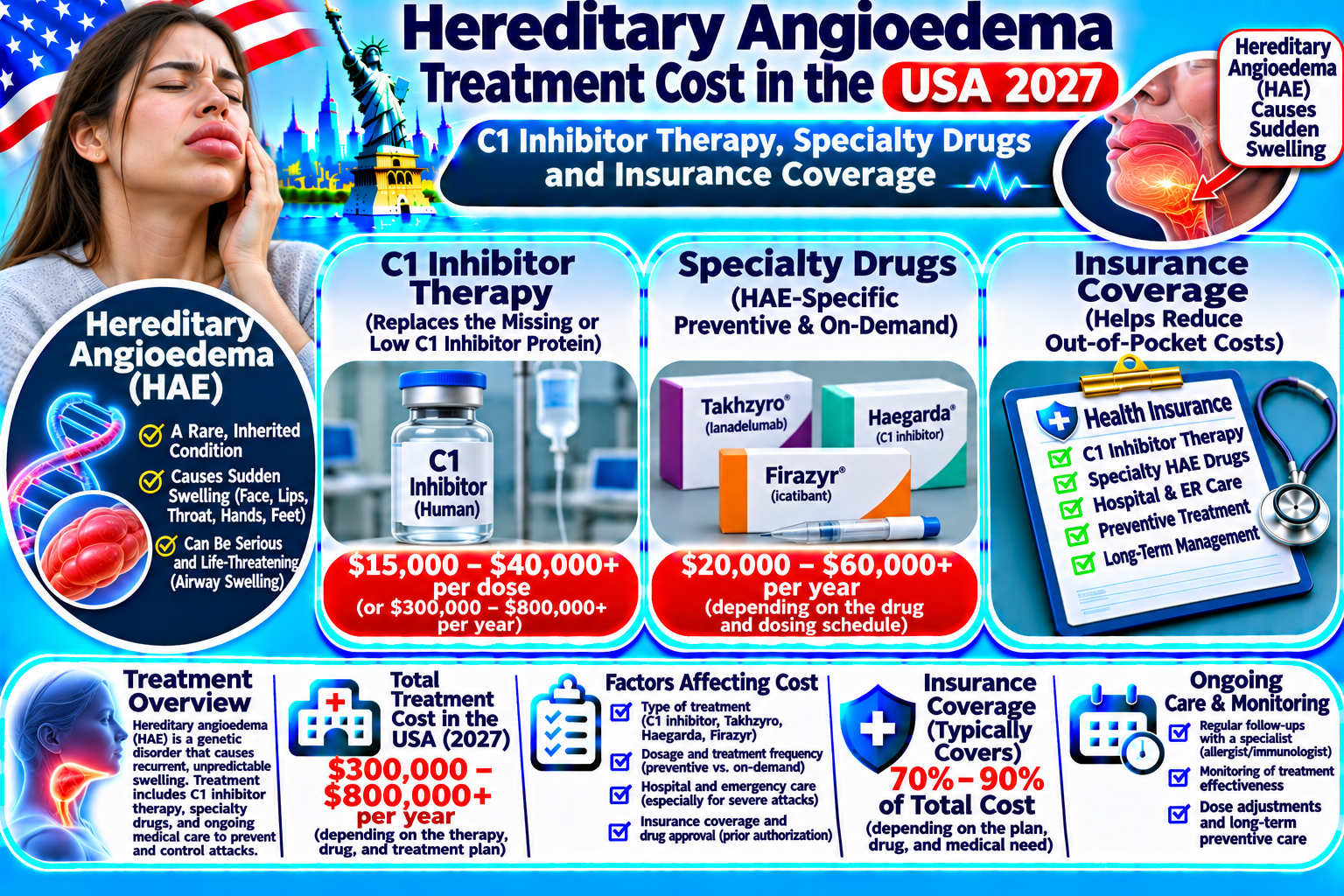
Understanding hereditary angioedema treatment costs in the USA in 2027 is important for patients and families comparing C1 inhibitor therapy, specialty medications, emergency treatment, genetic testing, and health insurance coverage.
Modern HAE treatment includes medications that stop attacks and preventive therapies that reduce their frequency. Although these treatments can significantly improve disease control, many are expensive specialty drugs requiring ongoing insurance authorization.
This comprehensive guide explains estimated American HAE treatment expenses for 2027, including C1 esterase inhibitor products, injectable and oral medications, emergency hospital bills, diagnostic testing, and financial assistance options.
What Is Hereditary Angioedema?
Hereditary angioedema is an inherited condition associated with abnormal regulation of pathways involved in producing bradykinin, a substance that increases blood vessel permeability.
Excessive bradykinin activity allows fluid to move into surrounding tissues, producing episodes of swelling.
HAE often begins during childhood or adolescence, although symptoms may appear later. Attack frequency and severity vary substantially between individuals.
Unlike common allergic swelling, most HAE attacks are not driven by histamine. Consequently, standard allergy treatments such as antihistamines and corticosteroids are generally ineffective for typical bradykinin-mediated HAE attacks.
Types of Hereditary Angioedema
HAE Type 1
Type 1 HAE usually involves reduced levels and activity of C1 esterase inhibitor, a protein that regulates important immune and inflammatory pathways.
HAE Type 2
Type 2 HAE generally involves normal or elevated amounts of C1 inhibitor protein with reduced functional activity.
HAE With Normal C1 Inhibitor
Some patients have HAE symptoms despite normal C1 inhibitor measurements. Certain cases are associated with identifiable genetic variants, while others remain unexplained.
Diagnosis and treatment decisions for this form require specialist assessment because the evidence and medication indications differ from classic HAE.
Common Symptoms of HAE
- Recurring swelling of the hands or feet.
- Facial or lip swelling.
- Severe abdominal pain during attacks.
- Nausea, vomiting, or diarrhea.
- Swelling after dental procedures or physical trauma.
- Throat tightness or voice changes.
- Difficulty swallowing.
- Breathing difficulty during airway attacks.
Attacks may occur without an obvious trigger. Stress, infections, injuries, hormonal changes, and certain medications can influence symptoms in some patients.
Emergency warning: Throat swelling, voice changes, or breathing difficulty requires emergency medical care, even when the patient has access to prescribed rescue medication.
How Is Hereditary Angioedema Diagnosed?
C4 Complement Blood Test
A C4 blood test is commonly used during the diagnostic evaluation. Reduced C4 levels can support suspicion of HAE, although results must be interpreted with other findings.
C1 Inhibitor Antigen Testing
This blood test measures the quantity of C1 esterase inhibitor protein.
C1 Inhibitor Functional Testing
Functional testing evaluates whether the protein works adequately. It helps distinguish between classic HAE types.
Genetic Testing
Genetic testing may help clarify uncertain diagnoses, evaluate particular HAE subtypes, or support family assessment.
Not every patient with typical laboratory-confirmed HAE requires broad genetic testing.
Family Screening
Because HAE is commonly inherited in an autosomal dominant pattern, biological relatives may benefit from appropriate evaluation.
Hereditary Angioedema Treatment Options
On-Demand Treatment
On-demand medications are used to treat an HAE attack after symptoms begin. Patients should have timely access to an effective prescribed rescue treatment.
Options for appropriately eligible patients include intravenous C1 inhibitor concentrates, icatibant injections, and oral sebetralstat.
Other treatments, including ecallantide, may be used in selected circumstances under appropriate medical supervision.
C1 Inhibitor Replacement Therapy
C1 inhibitor replacement supplies functional protein to help control the biological pathways responsible for HAE swelling.
Products include Berinert and Ruconest for acute attacks, and Cinryze or Haegarda for routine prevention under their respective approved indications.
Long-Term Preventive Therapy
Long-term prophylaxis aims to reduce the frequency and severity of HAE attacks.
Options include subcutaneous C1 inhibitor, lanadelumab, oral berotralstat, garadacimab, and donidalorsen, depending on patient eligibility and current prescribing information.
Short-Term Prevention
Some patients require preventive treatment before dental procedures, surgery, or other events that may trigger an attack.
Intravenous C1 inhibitor may be recommended in selected circumstances. Rescue treatment must still be available because preventive therapy cannot guarantee complete protection.
Hereditary Angioedema Treatment Cost in the USA in 2027
HAE treatment expenses in the United States vary significantly according to medication selection, attack frequency, patient weight, preventive treatment requirements, and insurance arrangements.
Specialty medications represent a major financial burden. Preventive therapies can cost hundreds of thousands of dollars annually at gross pricing levels, while individual rescue treatments may cost thousands of dollars per attack.
The following figures are illustrative 2027 budgeting estimates, not verified national averages, confirmed future prices, or guaranteed patient out-of-pocket amounts.
Estimated USA Cost Breakdown
| Treatment or Service | Estimated Cost (USD) |
|---|---|
| Allergy or Immunology Specialist Consultation | $200–$800+ |
| C4 and C1 Inhibitor Laboratory Testing | $200–$1,200+ |
| HAE Genetic Testing | $500–$4,000+ |
| C1 Inhibitor Rescue Treatment Episode | $5,000–$20,000+ |
| Icatibant Rescue Treatment | $1,500–$12,000+ per dose |
| Oral Sebetralstat Rescue Treatment | $5,000–$20,000+ per attack |
| Preventive C1 Inhibitor Therapy | $20,000–$60,000+ per month |
| Lanadelumab Preventive Therapy | $15,000–$45,000+ per month |
| Oral Berotralstat Preventive Therapy | $20,000–$45,000+ per month |
| Other Specialty Preventive Therapies | $15,000–$55,000+ per month |
| Emergency Department Visit | $2,000–$12,000+ |
| Hospital Admission for Severe Attack | $10,000–$50,000+ |
| ICU Treatment for Airway Complications | $30,000–$120,000+ |
Important: These hypothetical ranges are for financial planning only. Product prices can differ greatly according to dose, age, body weight, pharmacy, and insurance contracts. Emergency and hospital estimates may already include medication and physician charges. Avoid adding overlapping costs without an itemized estimate.
USA Hereditary Angioedema Cost Comparison
Because this article focuses on the United States, the following table compares different American treatment scenarios rather than international countries.
| USA Treatment Scenario | Illustrative Annual Budget |
|---|---|
| Monitoring With Infrequent Rescue Treatment | $10,000–$60,000+ |
| Frequent Attacks Requiring Rescue Medication | $60,000–$250,000+ |
| Oral Preventive Therapy and Rescue Access | $250,000–$550,000+ |
| Injectable Preventive Therapy and Monitoring | $200,000–$700,000+ |
| Complex HAE With Severe Hospitalized Attacks | $300,000–$800,000+ |
These scenarios are illustrative rather than standardized treatment packages. Actual expenses depend on attack patterns, preventive medication choice, complications, and insurance benefits.
C1 Inhibitor Therapy Costs for Hereditary Angioedema
C1 inhibitor replacement therapy is an established treatment for hereditary angioedema associated with C1 inhibitor deficiency or dysfunction. It increases functional C1 inhibitor activity and helps regulate the biological pathways responsible for swelling attacks.
Some C1 inhibitor products are prescribed for acute attacks, while others are approved for routine prevention. Patients should not assume that all products have interchangeable indications or administration schedules.
The total cost depends on the specific medication, dose, body weight, infusion requirements, and frequency of treatment.
Intravenous administration may require nursing services, infusion supplies, and professional training for eligible patients or caregivers.
Berinert and Ruconest Treatment Expenses
Berinert is a plasma-derived C1 inhibitor product used for treating HAE attacks. Ruconest is a recombinant C1 inhibitor product also used for acute treatment in eligible patients.
These medications are generally administered intravenously and may be supplied through specialty pharmacies.
Drug acquisition costs can be substantial, particularly when a patient requires multiple rescue treatments during the year.
Some individuals may be trained to administer appropriate treatments outside a hospital setting, subject to medical assessment and product instructions.
Patients should confirm medication availability before an attack rather than waiting until emergency symptoms develop.
Haegarda and Cinryze Preventive Treatment Costs
Haegarda is a subcutaneous C1 inhibitor therapy used for routine prevention of HAE attacks in eligible patients.
Cinryze is an intravenous C1 inhibitor product used for routine prevention under its approved indication.
Preventive treatment can reduce attack frequency, but it does not eliminate the need for rescue medication.
Because preventive C1 inhibitor treatment is administered repeatedly, annual gross medication expenses can be very high.
Subcutaneous administration may reduce the need for repeated intravenous access, although supplies, training, and insurance authorization remain important considerations.
Lanadelumab Specialty Drug Expenses
Lanadelumab, marketed as Takhzyro, is a monoclonal antibody that inhibits plasma kallikrein and helps prevent HAE attacks.
It is administered by subcutaneous injection according to the approved dosing schedule.
Some patients with sustained disease control may qualify for an adjusted dosing interval under specialist guidance.
Annual costs depend on the prescribed schedule, pharmacy arrangements, insurance reimbursement, and patient assistance eligibility.
Patients should never independently change injection frequency to reduce medication expenses.
Oral Berotralstat Treatment Costs
Berotralstat, marketed as Orladeyo, is an oral plasma kallikrein inhibitor used for routine prevention of HAE attacks.
Oral administration may be more convenient for some patients because it avoids regular injections.
However, the medication remains a high-cost specialty treatment and is not intended to stop an acute attack after symptoms begin.
Insurance plans may require documentation of the HAE diagnosis, previous attack history, and medical necessity.
Newer Preventive HAE Medications
Additional preventive therapies include garadacimab, marketed as Andembry, and donidalorsen, marketed as Dawnzera.
These medications target different components of the pathways responsible for HAE attacks.
Their availability, approved age groups, dosing schedules, and insurance requirements differ.
Patients should discuss clinical eligibility, expected benefits, safety, and long-term financial considerations with an HAE specialist.
Oral and Injectable Rescue Medication Costs
On-demand treatment is essential because attacks can occur unexpectedly, even in patients receiving effective preventive medication.
Icatibant is an injectable medication that blocks the bradykinin B2 receptor. Generic formulations may offer different pricing options compared with branded products.
Sebetralstat, marketed as Ekterly, is an oral on-demand treatment for eligible patients. It inhibits plasma kallikrein and can be taken when an attack begins according to prescribing instructions.
The total annual cost of rescue treatment depends on attack frequency, medication selection, and the number of doses required.
Emergency Hospital Bills for HAE Attacks
Severe hereditary angioedema attacks can require emergency treatment, particularly when swelling affects the throat or breathing.
Hospital expenses may include:
- Emergency department evaluation.
- Airway assessment and monitoring.
- Specialist consultations.
- Intravenous rescue medication.
- Laboratory testing when indicated.
- Observation or hospital admission.
- Intensive care for serious airway complications.
- Advanced airway management when necessary.
Upper airway attacks are medical emergencies. Patients should follow their emergency action plan and seek immediate medical assistance when airway symptoms develop.
HAE Treatment With Health Insurance
Many comprehensive American health insurance plans cover medically necessary hereditary angioedema treatment, including eligible specialty medications, diagnostic testing, specialist consultations, and emergency hospital services.
However, coverage depends on the patient’s policy, prescription formulary, provider network, and authorization requirements.
Important insurance considerations include:
- Annual deductible and out-of-pocket maximum.
- Coverage for C1 inhibitor replacement products.
- Specialty pharmacy participation.
- Prior authorization for preventive medications.
- Coverage for rescue medication supplies.
- Home administration and training benefits.
- Emergency department and hospital coverage.
- Copayments and coinsurance.
Patients should verify both preventive and on-demand medication coverage. Approval for one product does not guarantee coverage for another.
Medicare Coverage for Hereditary Angioedema
Medicare may cover medically necessary HAE treatment for eligible beneficiaries when applicable coverage requirements are satisfied.
Medicare Part B may cover certain eligible physician-administered medications and outpatient services.
Medicare Part D may cover qualifying prescription medications supplied through specialty pharmacies.
Coverage depends on the product, administration setting, and specific benefit rules.
Medicare Advantage and prescription drug plans may impose additional authorization or pharmacy network requirements.
Medicaid and Financial Assistance
Medicaid may cover medically necessary hereditary angioedema treatment for eligible individuals, subject to state-specific requirements.
Some specialty medication manufacturers provide patient support services or financial assistance programs for qualifying patients.
Patient advocacy organizations and hospital financial counselors may help families understand available resources.
Assistance programs have eligibility restrictions, and certain manufacturer copay programs are not available to patients using federal healthcare programs.
HAE Treatment Without Insurance
Uninsured patients may face substantial expenses for rescue medication, preventive therapy, diagnostic testing, and emergency hospitalization.
Patients should contact specialty pharmacies and treatment centers to request written estimates and explore financial assistance options.
Because HAE attacks can be unpredictable, financial planning should include reliable access to emergency medication.
Factors Influencing Hereditary Angioedema Treatment Prices
1. Attack Frequency
Patients experiencing frequent attacks may require more rescue medication and additional medical visits.
2. Preventive Medication Selection
C1 inhibitor products, lanadelumab, berotralstat, and newer preventive therapies have different dosing schedules and acquisition costs.
3. Patient Weight and Dosage
Some C1 inhibitor products use weight-based dosing, which can affect medication requirements.
4. Administration Setting
Home administration, infusion centers, and hospital outpatient departments may have different professional and facility charges.
5. Insurance Coverage
Deductibles, negotiated medication prices, pharmacy formularies, and authorization requirements influence patient financial responsibility.
6. Hospitalization and Complications
Severe abdominal attacks, airway involvement, emergency procedures, and intensive care can substantially increase expenses.
7. Geographic Location
Healthcare costs vary across American states and cities because of regional provider pricing and insurance arrangements.
Long-Term HAE Management Costs
Hereditary angioedema generally requires lifelong planning, even when preventive treatment provides good symptom control.
Patients should attend periodic specialist appointments to review attack frequency, medication effectiveness, side effects, and quality of life.
Long-term care may include:
- Regular allergy or immunology consultations.
- Medication reviews and prescription renewals.
- Emergency treatment plan updates.
- Assessment of preventive therapy effectiveness.
- Training for appropriate home treatment.
- Family screening and genetic counseling.
- Coordination before surgery or dental procedures.
Patients should also consider transportation, missed work, caregiving responsibilities, and the cost of maintaining an adequate rescue medication supply.
How to Reduce HAE Treatment Costs
- Verify insurance benefits before starting specialty treatment.
- Request written estimates from specialty pharmacies.
- Confirm that prescribed medications are on the insurance formulary.
- Review prior authorization and renewal requirements.
- Ask about manufacturer assistance programs.
- Explore medically appropriate home administration options.
- Discuss Medicare or Medicaid eligibility.
- Work with an experienced HAE care coordinator or financial counselor.
Patients should never discontinue preventive treatment or reduce their emergency medication supply solely because of cost without consulting their specialist.
Frequently Asked Questions
How much does hereditary angioedema treatment cost in the USA in 2027?
Illustrative annual gross expenses may range from thousands of dollars for infrequent rescue treatment to several hundred thousand dollars for ongoing specialty preventive therapy.
How much does C1 inhibitor therapy cost?
C1 inhibitor medication can cost thousands of dollars per treatment episode. Preventive therapy may generate substantial recurring annual expenses.
Does insurance cover HAE specialty drugs?
Many comprehensive plans cover medically necessary HAE medications, although prior authorization, specialty pharmacy rules, and patient cost-sharing may apply.
Is hereditary angioedema curable?
There is currently no established cure for most forms of hereditary angioedema. Available treatments can control attacks and reduce disease burden.
Can oral medication treat HAE?
Yes. Berotralstat is used for prevention, while sebetralstat is an oral on-demand option for eligible patients. These medications serve different purposes.
Do patients need rescue medication while receiving prevention?
Yes. Breakthrough attacks can occur despite preventive treatment, so access to effective on-demand medication remains essential.
Are antihistamines effective for HAE?
Standard antihistamines generally do not effectively treat classic bradykinin-mediated HAE attacks. Disease-specific treatment is required.
Conclusion
Hereditary angioedema treatment costs in the USA in 2027 depend on C1 inhibitor therapy, specialty preventive medications, rescue treatment, diagnostic testing, emergency hospital bills, and insurance coverage.
Patients should compare complete treatment estimates, verify specialty medication benefits, and work with experienced allergy and immunology specialists.
Early diagnosis, reliable rescue medication access, individualized prevention, and financial planning can help families manage the long-term costs associated with hereditary angioedema.
Medical Disclaimer: This article provides general educational and financial planning information only. It does not replace professional medical advice, diagnosis, or treatment. All 2027 cost ranges are illustrative estimates and should be verified directly with specialists, pharmacies, hospitals, and insurance companies. Throat swelling or breathing difficulty requires immediate emergency medical attention.
