Introduction
Huntington’s disease is an inherited neurological disorder that gradually affects movement, thinking, behavior, and everyday functioning. It is caused by a genetic change involving the HTT gene. Although no established treatment can cure Huntington’s disease or reliably stop its progression, medications, rehabilitation, psychological support, and coordinated neurological care can help manage symptoms and maintain quality of life.

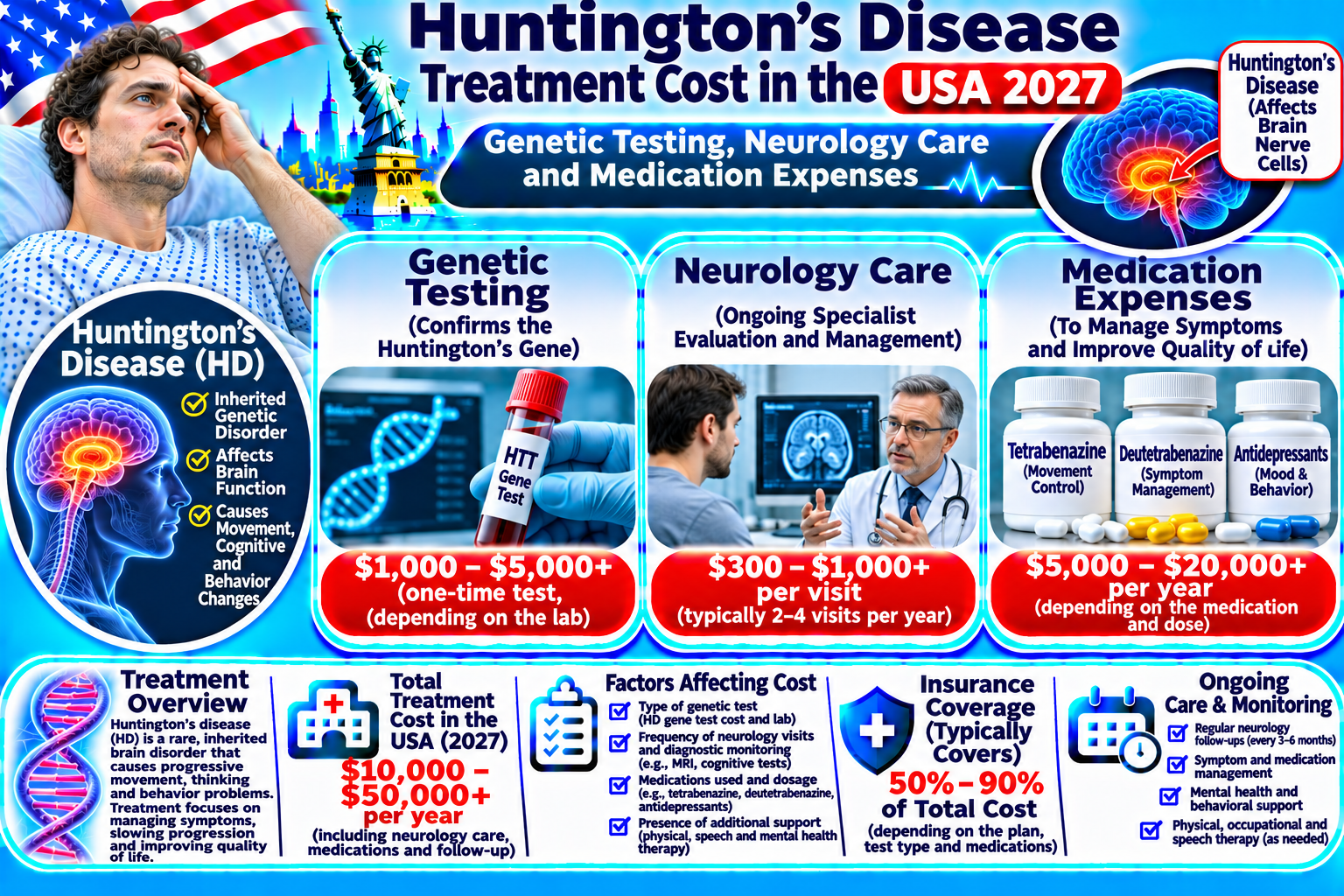
Understanding Huntington’s disease treatment costs in the USA in 2027 is important for patients and families comparing genetic testing prices, neurology consultations, movement disorder medications, rehabilitation expenses, insurance coverage, and long-term care bills.
The financial burden varies according to disease progression, medication selection, treatment frequency, insurance benefits, and the level of assistance required. Some patients manage symptoms through outpatient appointments, while others eventually need extensive caregiving or residential care.
This guide examines estimated American Huntington’s disease treatment expenses for 2027, including diagnosis, genetic testing, chorea medications, specialist services, rehabilitation, and long-term financial planning.
What Is Huntington’s Disease?
Huntington’s disease is a progressive neurodegenerative condition caused by an expanded CAG repeat in the HTT gene.
The disorder affects nerve cells in brain regions involved in movement, behavior, and cognitive function.
Symptoms often develop during adulthood, although onset can occur earlier or later.
Huntington’s disease follows an autosomal dominant inheritance pattern. A person with a disease-causing HTT expansion can pass the genetic change to a biological child.
Because the condition is inherited, genetic counseling can be important for affected families.
Common Symptoms of Huntington’s Disease
- Involuntary movements called chorea.
- Difficulty with balance and coordination.
- Changes in walking and posture.
- Problems with concentration and planning.
- Depression, irritability, or anxiety.
- Changes in judgment and decision-making.
- Speech and swallowing difficulties.
- Sleep disturbances.
- Increasing difficulty with daily activities.
Symptoms differ between individuals and may become more complex as the disease progresses.
How Is Huntington’s Disease Diagnosed?
Neurological Examination
A neurologist evaluates movement abnormalities, reflexes, balance, coordination, and other neurological findings.
HTT Genetic Testing
Genetic testing measures the number of CAG repeats in the HTT gene. The result helps establish whether a disease-associated expansion is present.
Testing should be accompanied by appropriate genetic counseling, particularly for adults considering predictive testing before symptoms develop.
Psychological and Cognitive Assessment
Specialists may evaluate memory, attention, emotional symptoms, and changes in daily functioning.
Brain Imaging
MRI or CT scans may be used to investigate neurological findings or exclude alternative conditions. Imaging alone cannot confirm Huntington’s disease.
Huntington’s Disease Treatment Options
VMAT2 Inhibitor Medications
Vesicular monoamine transporter 2 inhibitors, known as VMAT2 inhibitors, are used to manage chorea associated with Huntington’s disease.
Examples include tetrabenazine, deutetrabenazine, and valbenazine, subject to current prescribing indications and individual suitability.
These medications can reduce involuntary movements in selected patients but do not cure the underlying disease.
Psychiatric Symptom Management
Depression, anxiety, irritability, and other behavioral symptoms may require medication, counseling, or coordinated mental health treatment.
Medication selection depends on the patient’s symptoms, medical history, and potential adverse effects.
Physical Therapy
Physical therapy helps address balance, walking difficulties, mobility, strength, and fall prevention.
Occupational Therapy
Occupational therapists help patients adapt daily activities and use appropriate equipment to maintain independence.
Speech and Swallowing Therapy
Speech-language pathologists may provide communication strategies and evaluate swallowing difficulties.
Nutritional Support
Some patients experience weight loss or difficulty eating. Dietitians can recommend appropriate nutritional strategies and meal modifications.
Long-Term Supportive Care
As symptoms progress, patients may need home assistance, caregiver support, or residential nursing care.
Huntington’s Disease Treatment Cost in the USA in 2027
American Huntington’s disease treatment expenses depend on genetic testing, specialist appointments, prescription medications, rehabilitation, and the need for long-term support.
Specialty medications for chorea can represent a significant recurring expense, while advanced disease may create substantial caregiving and residential care costs.
The following figures are illustrative 2027 budgeting estimates rather than verified national averages, guaranteed provider quotations, or actual patient out-of-pocket payments.
Estimated USA Cost Breakdown
| Treatment or Service | Estimated Cost (USD) |
|---|---|
| Neurologist Consultation | $200–$800+ |
| HTT Genetic Testing | $300–$2,000+ |
| Genetic Counseling Session | $150–$500+ |
| Brain MRI | $800–$4,000+ |
| Cognitive or Psychological Evaluation | $300–$2,000+ |
| Generic Tetrabenazine Medication | $300–$3,000+ per month |
| Branded VMAT2 Inhibitor Medication | $5,000–$15,000+ per month |
| Other Symptom Management Medications | $20–$500+ per month |
| Physical Therapy Session | $100–$350+ |
| Speech Therapy Session | $100–$350+ |
| Home Care Assistance | $25–$45+ per hour |
| Residential Nursing Care | $7,000–$15,000+ per month |
| Hospitalization for Complications | $10,000–$50,000+ |
Important: These figures are hypothetical planning ranges. Medication prices vary by formulation, dosage, pharmacy, and insurance contracts. Residential care costs depend on location and level of assistance. The figures should not be interpreted as guaranteed 2027 charges.
USA Huntington’s Disease Cost Comparison
Because this article focuses on the United States, the following table compares American treatment scenarios rather than international countries.
| USA Treatment Scenario | Illustrative Annual Budget |
|---|---|
| Early-Stage Monitoring and Supportive Care | $2,000–$12,000+ |
| Generic Medication and Rehabilitation | $8,000–$45,000+ |
| Branded Chorea Medication and Specialist Care | $65,000–$190,000+ |
| Advanced Disease With Home Care | $40,000–$150,000+ |
| Residential Nursing Care and Medical Treatment | $90,000–$220,000+ |
These scenarios are illustrative rather than standardized treatment packages. Actual costs depend on disease progression, prescribed medications, rehabilitation needs, caregiving arrangements, and insurance coverage.
Genetic Testing Costs for Huntington’s Disease
HTT genetic testing is important for confirming Huntington’s disease and helping families understand inherited risk. Testing generally measures CAG repeat expansion rather than searching broadly for unrelated genetic conditions.
Diagnostic testing for a symptomatic patient differs from predictive testing for an adult who has a family history but no symptoms.
Predictive testing should involve informed consent, genetic counseling, and appropriate psychological support because results can have significant personal and family implications.
Laboratory prices vary. The total evaluation may also include counseling, neurological assessment, and follow-up appointments.
Neurology Care and Specialist Expenses
Patients with Huntington’s disease often require ongoing care from neurologists experienced in movement disorders.
Regular visits help assess involuntary movements, walking ability, cognitive changes, mood symptoms, medication response, and safety concerns.
Some patients benefit from multidisciplinary clinics that coordinate neurology, psychiatry, rehabilitation, nutrition, and social services.
Follow-up frequency depends on symptoms and disease progression. Patients experiencing medication side effects or rapid functional changes may need additional appointments.
Chorea Medication Costs
Chorea is a common movement symptom of Huntington’s disease. VMAT2 inhibitors can help reduce involuntary movements when they interfere with safety, comfort, eating, or daily activities.
Generic tetrabenazine may be less expensive than certain branded alternatives, although prices depend on dosage, pharmacy, and insurance arrangements.
Deutetrabenazine and valbenazine are branded treatment options that may involve substantial specialty pharmacy expenses.
These medications require careful medical supervision. VMAT2 inhibitors carry important warnings concerning depression and suicidal thoughts in patients with Huntington’s disease.
Patients and caregivers should promptly report new or worsening mood changes. Treatment selection must balance symptom relief against potential adverse effects.
Psychiatric Treatment and Counseling Costs
Huntington’s disease may cause depression, anxiety, irritability, impulsivity, and other behavioral symptoms.
Psychiatric treatment can involve medications, counseling, behavioral strategies, and caregiver education.
Some patients require regular mental health appointments, while others need more intensive support.
Emotional and behavioral symptoms should be addressed alongside movement difficulties because they can significantly affect quality of life and family functioning.
Physical, Occupational and Speech Therapy Expenses
Rehabilitation supports mobility, communication, swallowing safety, and independence.
Physical therapy may focus on balance, strength, walking, and fall prevention. Occupational therapy helps patients adapt everyday activities and use assistive devices.
Speech-language therapy can address communication difficulties and swallowing problems.
Costs depend on the number of sessions, treatment setting, insurance benefits, and patient needs.
Long-Term Care and Nursing Home Costs
Advanced Huntington’s disease may require substantial assistance with eating, dressing, mobility, personal hygiene, and medication management.
Some families arrange paid home caregivers, while others consider assisted living or skilled nursing facilities.
Residential care can become one of the largest expenses associated with the disease.
Patients and families should evaluate staffing, neurological care experience, safety measures, and total monthly charges when comparing facilities.
Huntington’s Disease Treatment With Health Insurance
Many comprehensive American health insurance plans cover medically necessary Huntington’s disease evaluation, specialist consultations, prescription medications, and rehabilitation services.
However, coverage depends on the patient’s policy, provider network, medication formulary, and medical necessity requirements.
Important insurance considerations include:
- Annual deductible and out-of-pocket maximum.
- Coverage for HTT genetic testing.
- Genetic counseling benefits.
- Prior authorization for VMAT2 inhibitors.
- Specialty pharmacy requirements.
- Physical and speech therapy coverage.
- Mental health treatment benefits.
- Home health and residential care limitations.
Health insurance often provides more limited coverage for long-term custodial care than for medically necessary hospital or specialist services.
Medicare and Medicaid Coverage
Medicare may cover medically necessary Huntington’s disease treatment for eligible beneficiaries when applicable requirements are satisfied.
Medicare Part B generally covers eligible outpatient physician services and certain rehabilitation treatments, while Part D may cover qualifying prescription medications.
Original Medicare does not generally pay for long-term custodial nursing home care when that is the only care required.
Medicaid may provide long-term care coverage for eligible individuals, subject to state-specific financial and clinical requirements.
Huntington’s Disease Treatment Without Insurance
Uninsured patients may face significant expenses for genetic testing, specialty medications, neurology appointments, and rehabilitation.
Patients should request written estimates and ask about hospital financial assistance, manufacturer support, and community resources.
Families should also consider long-term caregiving needs when planning future expenses.
Factors Influencing Huntington’s Disease Treatment Prices
1. Disease Progression
Advanced symptoms may require more frequent medical visits, rehabilitation, supervision, and residential care.
2. Medication Selection
Generic and branded chorea medications can have substantially different prices.
3. Genetic Testing and Counseling
Testing methods, counseling requirements, and additional evaluations influence diagnostic expenses.
4. Rehabilitation Frequency
Repeated physical, occupational, and speech therapy sessions can increase annual costs.
5. Insurance Coverage
Deductibles, negotiated prices, prescription formularies, and authorization requirements affect patient financial responsibility.
6. Caregiving Requirements
Home assistance and residential nursing care can become major long-term expenses.
7. Geographic Location
Healthcare and caregiving prices differ across American states and cities.
How to Reduce Huntington’s Disease Treatment Costs
- Verify insurance coverage before specialty medication treatment.
- Request complete written estimates for genetic testing.
- Confirm neurologists and rehabilitation providers are in-network.
- Compare medically appropriate generic medication options.
- Ask about manufacturer assistance programs.
- Review Medicare and Medicaid eligibility.
- Explore community-based caregiver support services.
- Consult a hospital social worker or financial counselor.
Patients should never discontinue prescribed medications or rehabilitation solely because of cost without discussing alternatives with their healthcare team.
Frequently Asked Questions
How much does Huntington’s disease treatment cost in the USA in 2027?
Illustrative annual expenses may range from several thousand dollars for early-stage monitoring to more than $100,000 for patients requiring expensive medications or extensive caregiving.
How much does Huntington’s disease genetic testing cost?
Illustrative HTT testing costs may range from approximately $300 to $2,000 or more, depending on the laboratory and additional services.
Does insurance cover Huntington’s disease medication?
Many comprehensive insurance plans cover medically necessary medications, although specialty drug authorization and cost-sharing may apply.
Can Huntington’s disease be cured?
There is currently no established cure. Available treatments focus on symptom management, safety, function, and quality of life.
Does every patient need chorea medication?
No. Medication is generally considered when involuntary movements interfere with daily functioning, comfort, safety, or other treatment goals.
Does Medicare cover nursing home care?
Medicare may cover qualifying short-term skilled nursing care, but it generally does not cover long-term custodial care alone.
Conclusion
Huntington’s disease treatment costs in the USA in 2027 depend on genetic testing, neurology care, chorea medications, rehabilitation, mental health services, and long-term caregiving needs.
Patients and families should compare complete treatment estimates, verify insurance benefits, and work with experienced neurological specialists.
Early planning, individualized symptom management, coordinated rehabilitation, and financial counseling can help families prepare for the ongoing expenses associated with Huntington’s disease.
Medical Disclaimer: This article provides general educational and financial planning information only. It does not replace professional medical advice, diagnosis, or treatment. All 2027 cost ranges are illustrative estimates and should be verified directly with healthcare providers, pharmacies, laboratories, care facilities, and insurance companies.
