Introduction
Guillain-Barré syndrome, commonly known as GBS, is a rare neurological disorder in which the immune system mistakenly attacks peripheral nerves. The condition can cause rapidly progressing muscle weakness, numbness, difficulty walking, and, in severe cases, breathing problems. Patients often require urgent hospitalization, intravenous immunoglobulin therapy, plasma exchange, and rehabilitation.

Understanding Guillain-Barré syndrome treatment costs in the USA in 2027 is important for patients and families comparing IVIG therapy prices, plasmapheresis expenses, intensive care unit charges, neurological consultations, and health insurance coverage.
The total cost varies according to disease severity, treatment selection, hospital length of stay, respiratory support requirements, rehabilitation needs, and insurance benefits. Some patients recover after a relatively short admission, while others require prolonged intensive care and months of rehabilitation.
This guide examines estimated American GBS treatment expenses for 2027, including diagnosis, IVIG, plasma exchange, ICU hospitalization, mechanical ventilation, rehabilitation, and financial assistance.
What Is Guillain-Barré Syndrome?
Guillain-Barré syndrome is an acute immune-mediated disorder affecting peripheral nerves and nerve roots. It often develops after a respiratory or gastrointestinal infection.
The immune response can damage nerve myelin or nerve fibers, interrupting communication between the brain, spinal cord, and muscles.
Symptoms usually progress over days to several weeks. Because weakness can affect breathing and swallowing, suspected GBS requires prompt medical evaluation.
Many patients improve substantially over time, but recovery may take months or longer. Some experience persistent weakness, fatigue, or other complications.
Common Symptoms of Guillain-Barré Syndrome
- Tingling or numbness in the feet and hands.
- Progressive muscle weakness.
- Difficulty walking or climbing stairs.
- Reduced or absent tendon reflexes.
- Facial muscle weakness.
- Difficulty swallowing or speaking.
- Abnormal heart rate or blood pressure.
- Severe nerve-related pain.
- Breathing difficulty in advanced cases.
Rapidly worsening weakness, difficulty breathing, or trouble swallowing requires emergency medical attention.
Types of Guillain-Barré Syndrome
Acute Inflammatory Demyelinating Polyneuropathy
Acute inflammatory demyelinating polyneuropathy, or AIDP, is a common GBS form in North America. It primarily affects the protective myelin covering peripheral nerves.
Acute Motor Axonal Neuropathy
Acute motor axonal neuropathy, or AMAN, primarily affects motor nerve fibers and may cause significant muscle weakness.
Acute Motor-Sensory Axonal Neuropathy
Acute motor-sensory axonal neuropathy, or AMSAN, affects both motor and sensory nerve fibers.
Miller Fisher Syndrome
Miller Fisher syndrome is a related variant commonly associated with impaired eye movements, poor coordination, and reduced reflexes.
How Is Guillain-Barré Syndrome Diagnosed?
Neurological Examination
Doctors evaluate muscle strength, reflexes, sensation, walking ability, and symptom progression.
Nerve Conduction Studies
Nerve conduction studies and electromyography help identify patterns of peripheral nerve dysfunction.
Lumbar Puncture
Cerebrospinal fluid testing may reveal elevated protein with relatively few white blood cells, although results can be normal early in the illness.
Respiratory Function Testing
Patients may undergo repeated measurements of breathing strength because respiratory weakness can develop rapidly.
Additional Testing
Blood tests and selected imaging studies may help exclude alternative causes of weakness.
Guillain-Barré Syndrome Treatment Options
Intravenous Immunoglobulin Therapy
Intravenous immunoglobulin, or IVIG, is a standard treatment for patients with GBS who meet clinical treatment criteria.
A commonly used regimen provides a total dose of 2 grams per kilogram of body weight, typically administered over five days.
IVIG modifies harmful immune activity and can improve recovery when given during the appropriate treatment window.
Plasma Exchange or Plasmapheresis
Plasma exchange removes circulating plasma containing antibodies and other immune components that may contribute to nerve injury.
Treatment commonly involves approximately four to five exchanges, although the exact regimen depends on clinical circumstances.
IVIG and plasma exchange are both established treatments. Routine sequential use of both is generally not recommended because it has not shown a clear additional benefit.
Intensive Care Treatment
Patients with significant breathing weakness, unstable heart rate, blood pressure abnormalities, or swallowing difficulties may require ICU monitoring.
Mechanical Ventilation
Some patients need temporary ventilator support when respiratory muscles become too weak to maintain adequate breathing.
Physical Rehabilitation
Rehabilitation helps patients regain muscle strength, mobility, balance, and independence after the acute illness.
Supportive Medical Care
Supportive treatment may include pain management, blood clot prevention, nutritional support, infection prevention, and monitoring for autonomic complications.
Guillain-Barré Syndrome Treatment Cost in the USA in 2027
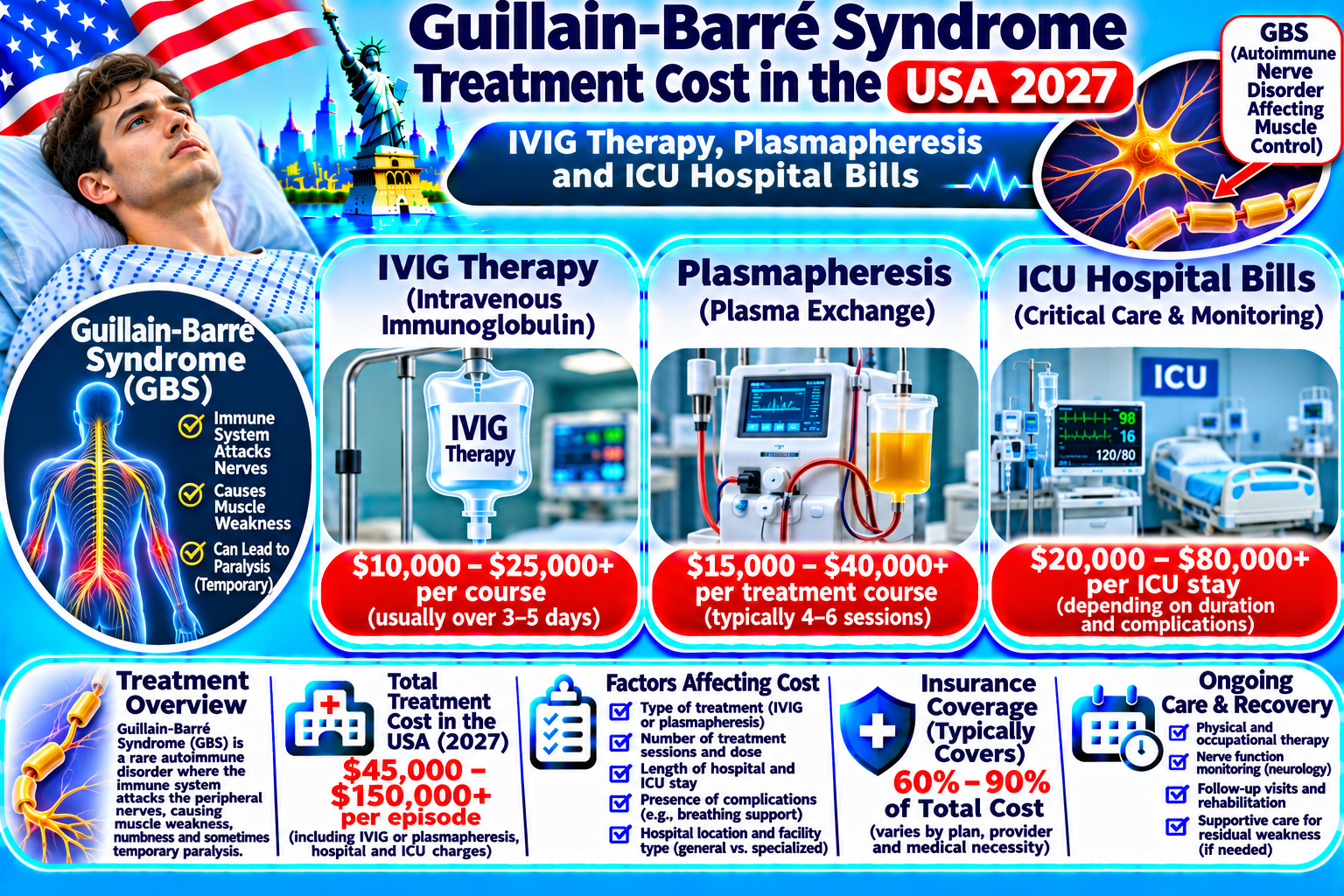
American GBS treatment expenses vary significantly depending on the need for IVIG, plasma exchange, intensive care, mechanical ventilation, and rehabilitation.
Hospitalization often represents the largest component of total treatment spending, especially when respiratory complications require prolonged ICU care.
The following figures are illustrative 2027 budgeting estimates rather than verified national averages, guaranteed hospital quotations, or actual patient out-of-pocket payments.
Estimated USA Cost Breakdown
| Treatment or Service | Estimated Cost (USD) |
|---|---|
| Neurologist Consultation | $200–$800+ |
| Blood Tests and Diagnostic Evaluation | $300–$2,000+ |
| Nerve Conduction Studies and EMG | $500–$3,000+ |
| Lumbar Puncture and Laboratory Analysis | $1,000–$4,000+ |
| IVIG Treatment Course | $15,000–$50,000+ |
| Plasma Exchange Treatment Course | $10,000–$35,000+ |
| General Hospital Admission | $15,000–$60,000+ |
| ICU Hospitalization | $30,000–$150,000+ |
| Mechanical Ventilation and Critical Care | $20,000–$100,000+ depending on duration |
| Inpatient Rehabilitation | $15,000–$70,000+ |
| Outpatient Physical Therapy Session | $100–$350+ |
Important: These are broad hypothetical planning ranges. ICU hospitalization may already include ventilator services, medications, laboratory tests, and professional charges. IVIG or plasma exchange may also be included in bundled hospital billing. Avoid adding overlapping costs without an itemized estimate.
USA Guillain-Barré Syndrome Cost Comparison
Because this article focuses on the United States, the following table compares American treatment scenarios rather than international countries.
| USA Treatment Scenario | Illustrative Total Budget |
|---|---|
| Hospitalization Without ICU Care | $20,000–$70,000+ |
| IVIG Treatment With Hospital Monitoring | $30,000–$90,000+ |
| Plasma Exchange With Hospitalization | $30,000–$100,000+ |
| ICU Care With Mechanical Ventilation | $75,000–$250,000+ |
| Severe GBS With Prolonged Rehabilitation | $100,000–$350,000+ |
These scenarios are illustrative rather than standardized treatment packages. Actual expenses depend on illness severity, treatment duration, hospital resources, complications, and insurance arrangements.
IVIG Therapy Costs for Guillain-Barré Syndrome
Intravenous immunoglobulin is a major treatment option for patients with Guillain-Barré syndrome. It contains antibodies obtained from screened donor plasma and helps modify the immune response responsible for nerve damage.
A standard treatment course commonly involves five consecutive days of intravenous infusions. The medication dose depends primarily on patient weight.
IVIG expenses may include medication, infusion administration, nursing care, laboratory monitoring, and management of adverse reactions.
Patients with kidney disease, clotting risks, or other medical conditions may require additional precautions and monitoring.
Unlike chronic antibody replacement therapy, IVIG for GBS is generally administered as a defined acute treatment course rather than automatically continued every month.
Plasmapheresis Treatment Costs
Plasmapheresis, also called therapeutic plasma exchange, removes plasma containing circulating immune components and replaces it with appropriate replacement fluid.
A typical course for severe GBS may involve four to five exchanges over approximately one to two weeks.
Expenses depend on the number of sessions, specialized equipment, vascular access requirements, replacement fluids, hospital charges, and professional services.
Some patients require a central venous catheter, which may increase procedural costs and introduce additional risks.
IVIG vs Plasmapheresis: Which Costs More?
Both IVIG and plasma exchange are effective treatments for appropriately selected patients with GBS.
IVIG may involve higher medication acquisition costs, while plasma exchange requires specialized equipment, trained staff, and repeated procedures.
The less expensive option varies between hospitals and insurance arrangements.
Clinical factors such as treatment availability, vascular access, medical stability, and potential complications should guide treatment selection.
Routine combination therapy is generally not recommended because administering plasma exchange and IVIG sequentially has not demonstrated a clear additional benefit.
ICU Hospital Bills for Severe GBS
Intensive care treatment is often the most expensive component of severe Guillain-Barré syndrome management.
Patients may require continuous heart monitoring, repeated respiratory assessments, nutritional support, and specialized nursing care.
ICU expenses may include:
- Critical care room and nursing charges.
- Mechanical ventilation services.
- Respiratory therapy.
- Cardiac and blood pressure monitoring.
- Laboratory testing and imaging.
- Intravenous medications.
- Specialist consultations.
- Management of infections and complications.
Longer ICU stays can significantly increase total hospital expenses, especially when patients require mechanical ventilation for several weeks.
Mechanical Ventilation Expenses
GBS can weaken the muscles responsible for breathing. Patients with respiratory failure may need temporary mechanical ventilation.
Ventilator-related care involves specialized equipment, respiratory therapists, critical care physicians, and continuous monitoring.
Some patients require a tracheostomy when prolonged ventilator support is anticipated.
Complications such as pneumonia, blood clots, or prolonged muscle weakness may increase hospitalization expenses.
Ventilation charges may already be included in a comprehensive ICU bill, so patients should avoid double-counting costs.
Rehabilitation and Recovery Costs
Recovery from Guillain-Barré syndrome can continue for months or longer after hospital discharge.
Patients with significant weakness may require inpatient rehabilitation, outpatient physical therapy, occupational therapy, or speech therapy.
Rehabilitation focuses on improving strength, mobility, balance, endurance, and daily functioning.
Some patients need mobility equipment, home modifications, or caregiver assistance during recovery.
These expenses may not be fully reflected in the initial hospital bill.
Guillain-Barré Syndrome Treatment With Health Insurance
Many comprehensive American health insurance plans cover medically necessary GBS evaluation, hospitalization, IVIG, plasma exchange, and rehabilitation.
However, coverage depends on the patient’s policy, treatment setting, provider network, and medical necessity requirements.
Important insurance considerations include:
- Annual deductible and out-of-pocket maximum.
- Emergency and inpatient hospital benefits.
- Coverage for IVIG medications.
- Plasma exchange procedure benefits.
- ICU and mechanical ventilation coverage.
- Inpatient rehabilitation authorization.
- Outpatient physical therapy limits.
- Copayments and coinsurance.
Patients should ask their insurer for an explanation of benefits and review hospital statements for possible billing errors.
Medicare and Medicaid Coverage
Original Medicare may cover medically necessary GBS treatment for eligible beneficiaries when applicable requirements are satisfied.
Medicare Part A generally applies to qualifying inpatient hospital services, while Part B covers eligible outpatient physician services and certain treatments.
Medicaid may cover medically necessary hospital care and rehabilitation for eligible individuals under state-specific rules.
Coverage details should be confirmed directly with the relevant program or insurance plan.
GBS Treatment Without Insurance
Uninsured patients may face substantial expenses because GBS frequently requires urgent hospitalization and specialized treatment.
Families should contact hospital financial counselors to discuss charity care, payment arrangements, and possible public insurance eligibility.
Emergency treatment should not be delayed while comparing prices because rapidly progressing GBS can become life-threatening.
Factors Influencing Guillain-Barré Syndrome Treatment Prices
1. Disease Severity
Patients with mild weakness may have lower expenses than those requiring intensive care or respiratory support.
2. IVIG Medication Dose
IVIG dosing depends on body weight, making medication expenses different between patients.
3. Plasma Exchange Requirements
The number of exchanges, vascular access procedures, and hospital resources influence plasmapheresis costs.
4. ICU Length of Stay
Prolonged intensive care can substantially increase hospitalization expenses.
5. Mechanical Ventilation
Respiratory failure may require advanced equipment, specialist services, and longer hospital admission.
6. Insurance Coverage
Deductibles, negotiated rates, provider networks, and rehabilitation benefits influence patient financial responsibility.
7. Recovery and Rehabilitation
Long-term weakness may require repeated therapy sessions, assistive equipment, and additional specialist appointments.
Long-Term Monitoring After GBS
Patients recovering from Guillain-Barré syndrome may need periodic neurological evaluations and rehabilitation assessments.
Follow-up care helps identify persistent weakness, neuropathic pain, fatigue, or mobility limitations.
Some patients experience prolonged recovery, while others regain function more quickly.
Patients with new or worsening weakness after initial improvement should seek medical reassessment rather than assuming the symptoms are part of ordinary recovery.
How to Reduce GBS Treatment Costs
- Review hospital bills for duplicate charges.
- Request an itemized statement after discharge.
- Confirm insurance coverage for rehabilitation.
- Ask about hospital financial assistance programs.
- Use in-network rehabilitation providers when possible.
- Explore Medicare or Medicaid eligibility.
- Discuss medically appropriate discharge planning.
- Work with a hospital social worker or financial counselor.
Financial decisions should never delay emergency evaluation or necessary treatment for rapidly progressive neurological symptoms.
Frequently Asked Questions
How much does Guillain-Barré syndrome treatment cost in the USA in 2027?
Illustrative treatment expenses may range from tens of thousands of dollars for hospital-based care to more than $250,000 for severe cases involving prolonged intensive care and mechanical ventilation.
How much does IVIG therapy cost for GBS?
A hypothetical IVIG treatment course may cost approximately $15,000 to $50,000 or more, depending on patient weight, product pricing, and hospital billing arrangements.
Is plasmapheresis cheaper than IVIG?
Not necessarily. Total costs depend on medication prices, exchange procedures, hospital resources, and treatment complications.
Does every GBS patient need ICU treatment?
No. ICU care is generally reserved for patients with significant respiratory weakness, autonomic instability, severe swallowing difficulties, or other high-risk features.
Does insurance cover Guillain-Barré syndrome?
Many comprehensive health insurance plans cover medically necessary GBS treatment, subject to policy requirements and patient cost-sharing.
Can Guillain-Barré syndrome be cured?
Many patients recover substantially, but some experience persistent weakness, fatigue, or other neurological symptoms. Recovery varies between individuals.
Conclusion
Guillain-Barré syndrome treatment costs in the USA in 2027 depend on IVIG therapy, plasmapheresis, ICU hospitalization, mechanical ventilation, rehabilitation, and insurance coverage.
Patients and families should review complete hospital expenses, verify rehabilitation benefits, and work with experienced neurologists and financial counselors.
Prompt medical treatment, careful hospital monitoring, individualized rehabilitation, and financial planning can help manage the substantial costs associated with GBS.
Medical Disclaimer: This article provides general educational and financial planning information only. It does not replace professional medical advice, diagnosis, or treatment. All 2027 cost ranges are illustrative estimates and should be verified directly with hospitals, neurologists, rehabilitation providers, and insurance companies.
