Introduction
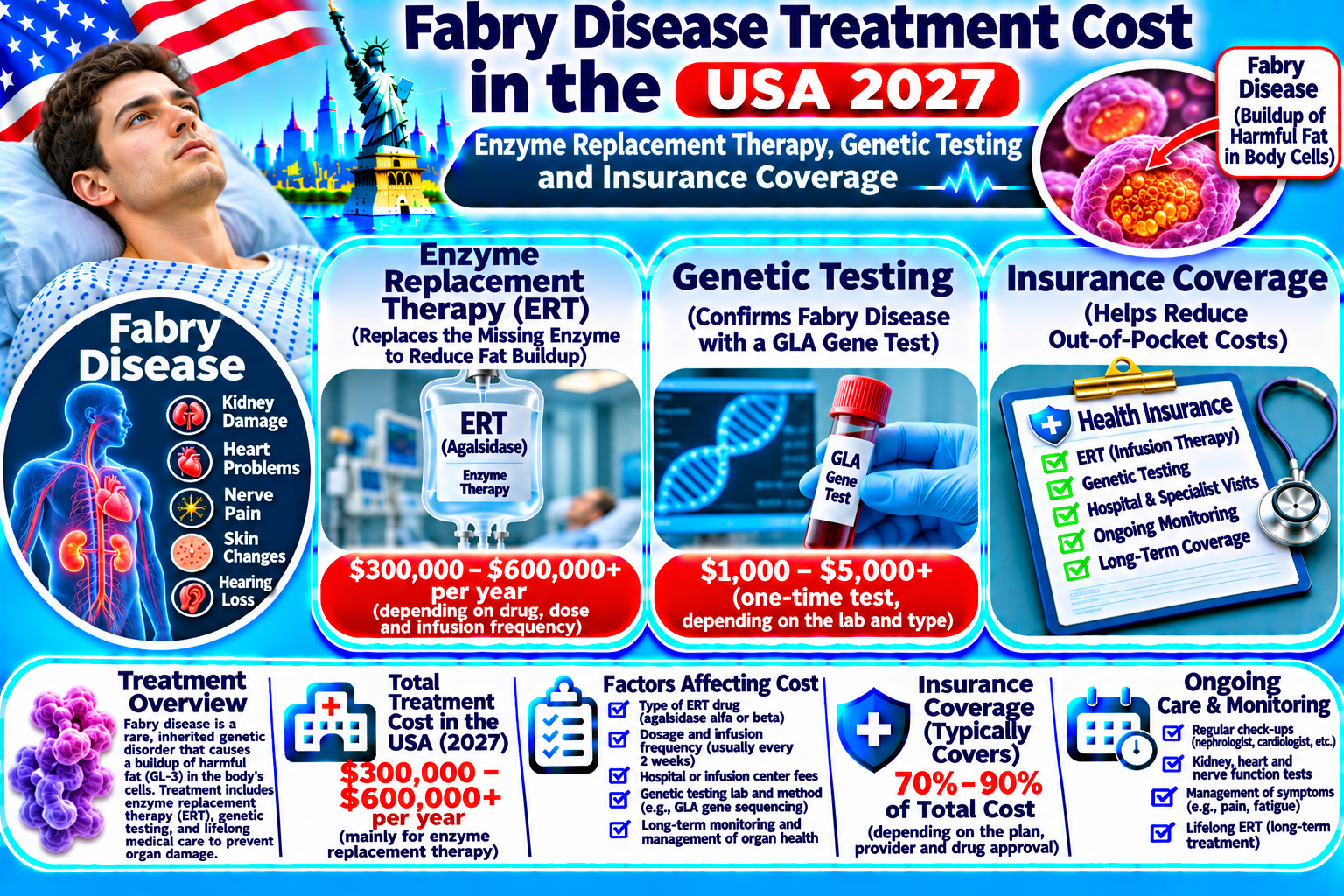
Fabry disease is a rare inherited metabolic disorder that affects the body’s ability to break down certain fatty substances. Over time, these substances accumulate in cells and may damage the kidneys, heart, nervous system, and other organs. Treatment can involve enzyme replacement therapy, oral chaperone medication, genetic testing, specialist consultations, and lifelong monitoring.

Understanding Fabry disease treatment costs in the USA in 2027 is important for patients and families comparing enzyme replacement therapy prices, genetic testing expenses, infusion center fees, hospital bills, and health insurance coverage.
Fabry disease treatment can be expensive because disease-specific medications are specialized therapies often required over many years. However, costs differ significantly according to the prescribed product, patient weight, insurance benefits, treatment location, and existing organ damage.
This guide explains estimated American Fabry disease treatment expenses for 2027, including diagnosis, enzyme replacement infusions, oral medication, insurance coverage, and financial assistance.
What Is Fabry Disease?
Fabry disease is caused by disease-associated variants in the GLA gene. These changes reduce the activity of an enzyme called alpha-galactosidase A.
When the enzyme does not work adequately, substances such as globotriaosylceramide accumulate inside cells. This buildup can gradually affect blood vessels, kidneys, heart tissue, and nerves.
Fabry disease is inherited in an X-linked pattern. People of different sexes can develop significant symptoms, although their clinical presentations may differ.
Early diagnosis and appropriate treatment may help slow disease progression and reduce the risk of irreversible organ complications.
Common Symptoms of Fabry Disease
- Burning pain or tingling in the hands and feet.
- Reduced ability to sweat normally.
- Heat or exercise intolerance.
- Abdominal pain, diarrhea, or digestive discomfort.
- Small reddish-purple skin lesions called angiokeratomas.
- Protein in the urine or declining kidney function.
- Heart enlargement or abnormal heart rhythms.
- Hearing problems or ringing in the ears.
- Increased risk of certain neurological complications.
Symptoms may appear during childhood or later in adulthood. Their severity varies considerably between individuals.
How Is Fabry Disease Diagnosed?
Alpha-Galactosidase A Enzyme Testing
An enzyme activity test measures how effectively alpha-galactosidase A functions. Very low activity can strongly support diagnosis, particularly in affected males.
However, enzyme activity may be within the normal range in some affected females, making genetic testing particularly important.
GLA Genetic Testing
Genetic testing identifies variants in the GLA gene. Results may confirm a diagnosis and help determine whether certain targeted medications are appropriate.
Kidney Function Testing
Blood and urine tests evaluate kidney function, protein leakage, and other indicators of renal damage.
Cardiac Evaluation
Electrocardiograms, echocardiograms, and sometimes cardiac MRI help identify heart involvement.
Family Screening
Because Fabry disease is inherited, genetic counseling and testing may be recommended for biological relatives at risk.
Fabry Disease Treatment Options
Enzyme Replacement Therapy
Enzyme replacement therapy, or ERT, supplies a functional version of the enzyme that is deficient in Fabry disease.
Two enzyme replacement products approved in the United States are agalsidase beta, marketed as Fabrazyme, and pegunigalsidase alfa-iwxj, marketed as Elfabrio.
Both are administered intravenously, generally every two weeks, according to their prescribing instructions.
Fabrazyme is approved for patients aged two years and older, while Elfabrio is approved for adults.
Oral Chaperone Therapy
Migalastat, marketed as Galafold, is an oral treatment approved for eligible adults with Fabry disease who have certain responsive, or amenable, GLA variants.
It helps stabilize specific forms of the affected enzyme. Not every patient qualifies for this medication.
Kidney Protection
Patients with kidney involvement may require blood pressure management, treatment for proteinuria, and regular nephrology follow-up.
Heart and Neurological Care
Additional treatment may address heart rhythm abnormalities, neuropathic pain, hearing problems, and other complications.
Advanced Kidney Treatment
Patients who develop kidney failure may require dialysis or kidney transplantation. These interventions create substantial additional expenses.
Fabry Disease Treatment Cost in the USA in 2027
Fabry disease treatment expenses in the United States depend on medication selection, dosing, infusion services, diagnostic testing, and organ complications.
Enzyme replacement therapy often represents the largest recurring expense. Published economic evaluations have reported annual disease-specific medication costs in the hundreds of thousands of dollars, although prices differ by country, product, and calculation method.
The following figures are hypothetical 2027 US budgeting ranges, not verified national averages, actual insurance reimbursements, or guaranteed provider quotations.
Estimated USA Cost Breakdown
| Treatment or Service | Estimated Cost (USD) |
|---|---|
| Specialist Consultation | $200–$800+ |
| Enzyme Activity Blood Test | $150–$800+ |
| GLA Genetic Testing | $500–$3,000+ |
| Advanced Genetic Evaluation | $1,000–$5,000+ |
| Kidney Blood and Urine Tests | $100–$600+ |
| Echocardiogram | $500–$2,500+ |
| Cardiac MRI | $1,500–$5,000+ |
| ERT Medication and Infusion Episode | $7,000–$20,000+ |
| ERT Annual Treatment | $180,000–$520,000+ |
| Oral Migalastat Therapy, Annual | $180,000–$400,000+ |
| Infusion Administration Only | $200–$1,500+ per session |
| Hospitalization for Complications | $10,000–$60,000+ |
Important: These figures are illustrative planning estimates. Annual ERT costs and per-infusion prices describe overlapping expenses and should not be added together. Actual medication prices depend on weight-based dosing, product, insurance contracts, and administration setting.
USA Fabry Disease Cost Comparison
Because this article focuses on the United States, the following table compares different American treatment scenarios rather than international countries.
| USA Treatment Scenario | Illustrative Annual Budget |
|---|---|
| Monitoring Without Disease-Specific Medication | $1,000–$8,000+ |
| Enzyme Replacement Therapy | $180,000–$520,000+ |
| Oral Chaperone Therapy | $180,000–$400,000+ |
| ERT With Significant Organ Complications | $220,000–$600,000+ |
These scenarios are not standardized treatment packages. A patient may experience substantially different costs depending on medical needs and insurance arrangements.
Enzyme Replacement Therapy Costs
Enzyme replacement therapy is one of the most important disease-specific treatments for Fabry disease. It replaces the deficient enzyme through scheduled intravenous infusions.
The prescribed dose is influenced by body weight, product selection, and the manufacturer’s treatment instructions.
Because ERT is usually administered every two weeks, patients may require approximately 26 infusion appointments annually.
The total expense can include medication, infusion supplies, nursing services, monitoring, and treatment of infusion reactions.
Home infusion may be appropriate for selected patients, but its availability depends on medical stability, professional supervision, and insurance coverage.
Fabrazyme vs Elfabrio Treatment Costs
Fabrazyme and Elfabrio are both enzyme replacement therapies available in the United States.
Fabrazyme contains agalsidase beta, while Elfabrio contains pegunigalsidase alfa-iwxj.
Both treatments generally follow an every-two-week infusion schedule, but their clinical characteristics and prescribing requirements differ.
Pricing comparisons must consider patient weight, required vials, product reimbursement, infusion setting, and insurance contracts.
Patients should not change products solely because of an advertised price without specialist evaluation.
Genetic Testing Costs for Fabry Disease
Genetic testing is particularly important because it can confirm a GLA variant and help identify relatives who may be affected.
Testing also helps determine whether a patient may qualify for migalastat therapy.
Expenses depend on whether the laboratory performs targeted variant testing, complete gene sequencing, or broader genetic analysis.
Genetic counseling may involve additional charges, although some families may qualify for sponsored testing programs.
Oral Migalastat Medication Expenses
Migalastat is an alternative disease-specific treatment for eligible adults with amenable GLA variants.
It is taken orally every other day according to its prescribing instructions.
Although oral treatment avoids regular intravenous infusion appointments, the medication itself remains expensive.
Eligibility depends on the genetic variant and clinical factors, including kidney function. Oral therapy is not automatically appropriate for every patient.
Kidney and Heart Monitoring Costs
Fabry disease can affect multiple organs, making regular monitoring essential even when symptoms appear stable.
Common monitoring services include:
- Kidney function blood tests.
- Urine protein measurements.
- Blood pressure assessment.
- Electrocardiograms.
- Echocardiograms.
- Cardiac MRI when indicated.
- Neurological evaluations.
- Specialist follow-up appointments.
Patients with established organ damage may require more frequent monitoring and additional treatments.
Hospital Fees for Fabry Disease Complications
Advanced Fabry disease can lead to serious kidney, cardiac, or neurological complications.
Hospital bills may include emergency evaluation, imaging, specialist services, medication, cardiac monitoring, and inpatient care.
Patients with kidney failure may need dialysis or transplantation, which can create substantial additional expenses.
Hospitalization costs vary according to the severity of complications and length of admission.
Fabry Disease Treatment With Health Insurance
Many comprehensive American health insurance plans cover medically necessary Fabry disease treatment, including eligible enzyme replacement therapy, genetic testing, specialist appointments, and hospital services.
However, coverage depends on the patient’s policy, diagnosis, prescribed medication, and authorization requirements.
Important insurance considerations include:
- Annual deductible and out-of-pocket maximum.
- Prior authorization for enzyme replacement therapy.
- Coverage for Fabrazyme or Elfabrio.
- Specialty pharmacy and infusion provider requirements.
- Genetic testing benefits.
- Coverage for oral migalastat.
- Home infusion eligibility.
- Hospital and specialist network participation.
Patients should request written confirmation of their expected financial responsibility before beginning expensive treatment.
Medicare and Medicaid Coverage
Medicare may cover qualifying Fabry disease treatment for eligible beneficiaries, depending on medical necessity and applicable benefit rules.
Medicare Part B generally covers eligible outpatient physician services and certain infused medications. Part D may cover qualifying oral prescription treatments.
Medicaid may provide coverage for eligible patients under state-specific rules.
Coverage for specialized medications can require prior authorization and documentation from the treating specialist.
Fabry Disease Treatment Without Insurance
Uninsured patients may face extremely high expenses for enzyme replacement therapy and oral disease-specific medication.
Patients should ask specialty treatment centers about financial counseling, manufacturer assistance, and available charitable support.
Written estimates should clarify whether infusion administration, medication, laboratory testing, and professional services are included.
Factors Influencing Fabry Disease Treatment Prices
1. Medication Selection
Enzyme replacement products and oral chaperone therapy have different prices, eligibility requirements, and administration costs.
2. Patient Weight
ERT dosing is weight-based, so medication requirements can differ between patients.
3. Infusion Location
Hospital outpatient departments, independent infusion centers, and home infusion services may have different facility charges.
4. Genetic Testing Requirements
Testing complexity and the number of family members evaluated influence diagnostic expenses.
5. Organ Damage
Kidney disease, heart complications, and neurological problems can increase the need for specialist treatment and hospitalization.
6. Insurance Coverage
Deductibles, negotiated prices, pharmacy formularies, and prior authorization rules influence patient out-of-pocket expenses.
7. Geographic Location
Healthcare prices differ across American states and cities because of regional provider charges and insurance arrangements.
Long-Term Fabry Disease Management
Fabry disease generally requires lifelong medical management and ongoing assessment of kidney, heart, and neurological health.
Patients receiving ERT need regular infusion appointments, while those taking migalastat require medication adherence and specialist monitoring.
Additional financial considerations include transportation, missed work, caregiver responsibilities, and treatment-related travel.
Patients should review their insurance coverage annually because specialty medication benefits and provider networks can change.
How to Reduce Fabry Disease Treatment Costs
- Verify insurance benefits before beginning treatment.
- Request complete written infusion estimates.
- Confirm specialists and infusion providers are in-network.
- Review specialty pharmacy requirements.
- Ask about manufacturer assistance programs.
- Explore medically appropriate infusion settings.
- Discuss Medicare or Medicaid eligibility.
- Work with a rare disease financial counselor.
Patients should never discontinue prescribed Fabry disease treatment solely because of cost without discussing alternatives with their healthcare team.
Frequently Asked Questions
How much does Fabry disease treatment cost in the USA in 2027?
Illustrative annual disease-specific medication expenses may reach hundreds of thousands of dollars. Actual costs depend on the product, patient weight, insurance arrangements, and additional medical needs.
How much does enzyme replacement therapy cost?
ERT can involve substantial recurring medication expenses, potentially exceeding $200,000 annually before insurance adjustments.
Does insurance cover Fabry disease treatment?
Many comprehensive plans cover medically necessary treatment, but authorization requirements, specialty pharmacy rules, and cost-sharing may apply.
Is genetic testing necessary?
Genetic testing is important for confirming many diagnoses, evaluating family members, and identifying patients eligible for certain targeted treatments.
Can Fabry disease be cured?
There is currently no established cure. Available treatments aim to reduce disease-related complications and protect organ function.
Is oral treatment available?
Yes. Migalastat is available for eligible adults with specific amenable GLA variants, but it is not suitable for every patient.
Conclusion
Fabry disease treatment costs in the USA in 2027 depend on enzyme replacement therapy, genetic testing, oral medications, infusion fees, specialist monitoring, and insurance coverage.
Patients should compare complete treatment estimates, verify specialty medication benefits, and consult experienced metabolic disease specialists before making medical decisions.
Early diagnosis, appropriate treatment, regular organ monitoring, and careful financial planning can help families manage the long-term costs associated with Fabry disease.
Medical Disclaimer: This article provides general educational and financial planning information only. It does not replace professional medical advice, diagnosis, or treatment. All 2027 cost ranges are illustrative estimates and should be verified directly with hospitals, specialists, pharmacies, laboratories, and insurance companies.
